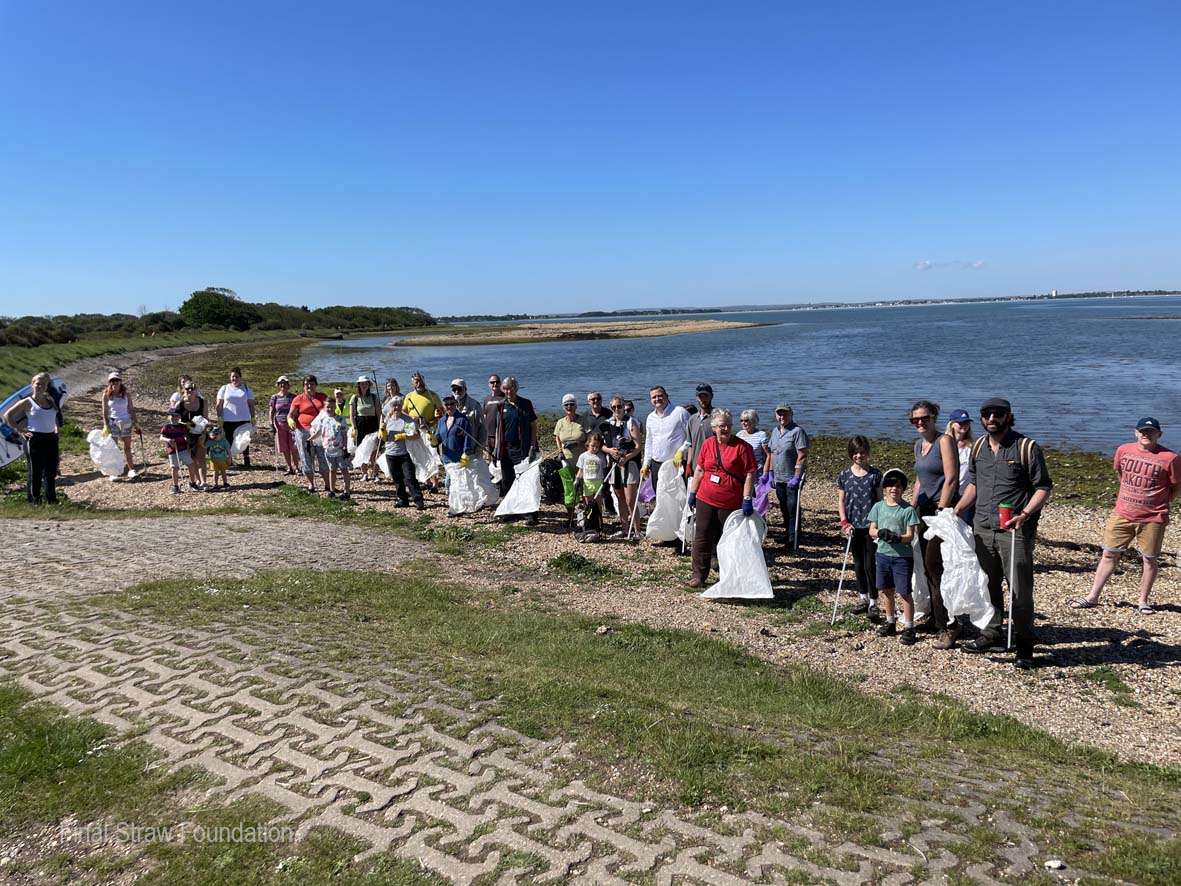
We have been made so proud by our amazing community today. Over 70 people turned up this chilly February morning to help us in our efforts to pick up as much plastic as we could, from a stretch of shore on Hayling Island.
This section of bay acts like a trap for flotsam, jetsam – and lots and lots and lots and lots of bits of plastic. So much of it is no bigger than a fingernail – small bits of plastic that have been partially broken down, nurdles (plastic pellets about the size of a lentil used in the plastic manufacturing process), straws, food wrappers, polystyrene and an awful amount of cotton bud plastic sticks. The seaweed along the shoreline is full of it, and we found that we would just think that we had cleared a small area, but moving the seaweed would reveal even more underneath.
We were there for two hours and in that time we collected enough plastic bits to fill around 30 bin bags. Our volunteers were a fantastic group, so enthusiastic and passionate about our local environment – we are incredibly grateful to them for giving up their Sunday morning to come and pick through seaweed and collect so much plastic litter, THANK YOU!