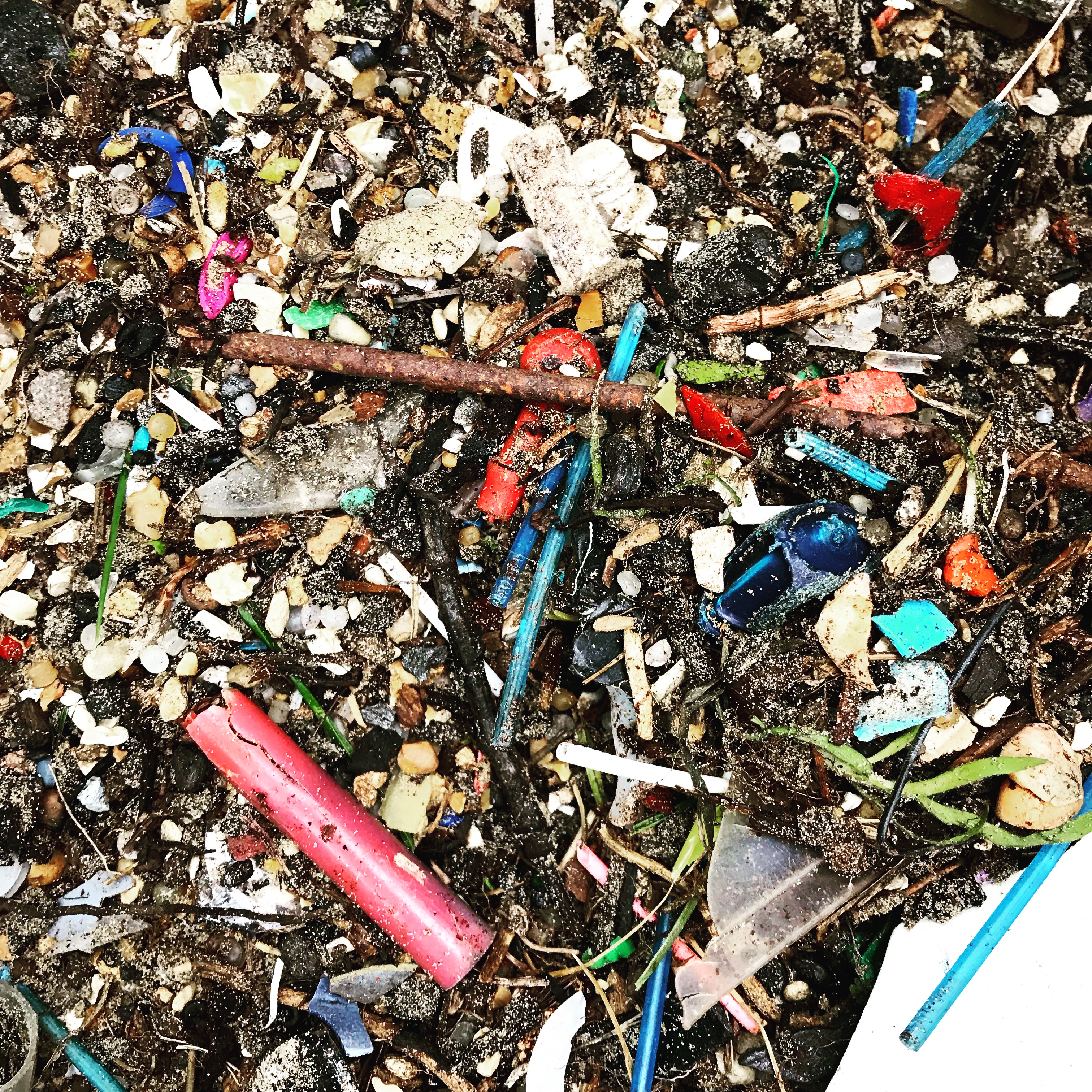
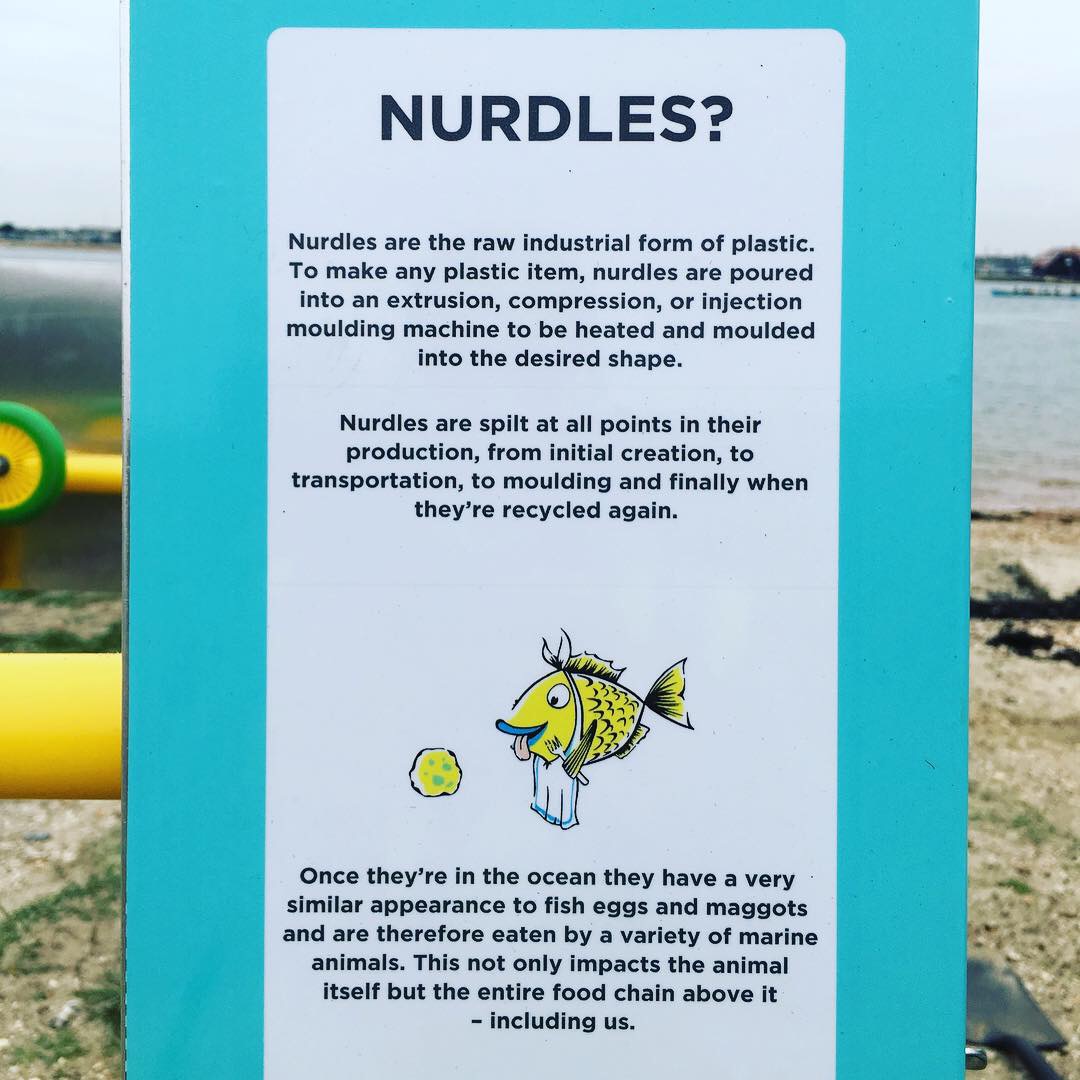
Nurdle… Trommel… Yes, those are real words! In case you haven’t come across them before, nurdles are small plastic pellets about the size of a lentil. They are used to make nearly all the plastic products that you buy and see in shops, at home and at work. Countless billion are used each year, and unfortunately, through mishandling and spillages, many end up washed into our waterways and end up on our shores. They look very like fish eggs to sea birds, who can end up feeding them to their chicks, and by fish who eat them.
The nurdle trommel is a large metal drum sieve, with a handle to turn it and a larger sieve on one end. How does it work? Well, you add around 5 shovels from the beach – the place we have tried it out so far is a mixture of sand, shingle and vegetation. We turn the handle and rotate the drum until all the small particles (sand particularly) have been sieved out. Then upend the drum over a container so that the nurdles, small bits of plastic and small stones fall through the larger mesh at the end, and anything bigger is left in the drum, and can be sorted by hand if needed. If small stones come through the mesh with the nurdles, we can separate them out by putting it all in a bucket and adding water – the plastic bits float up to the top and can be collected.
We managed to buy the trommel thanks to some ace joint fundraising by the Litter Pick Chicks and our team – so thank you so much to everyone who donated and enabled us to get hold of it, it saves a lot of time and makes our nurdle sieving much more efficient!
You can find out more about the trommel: here