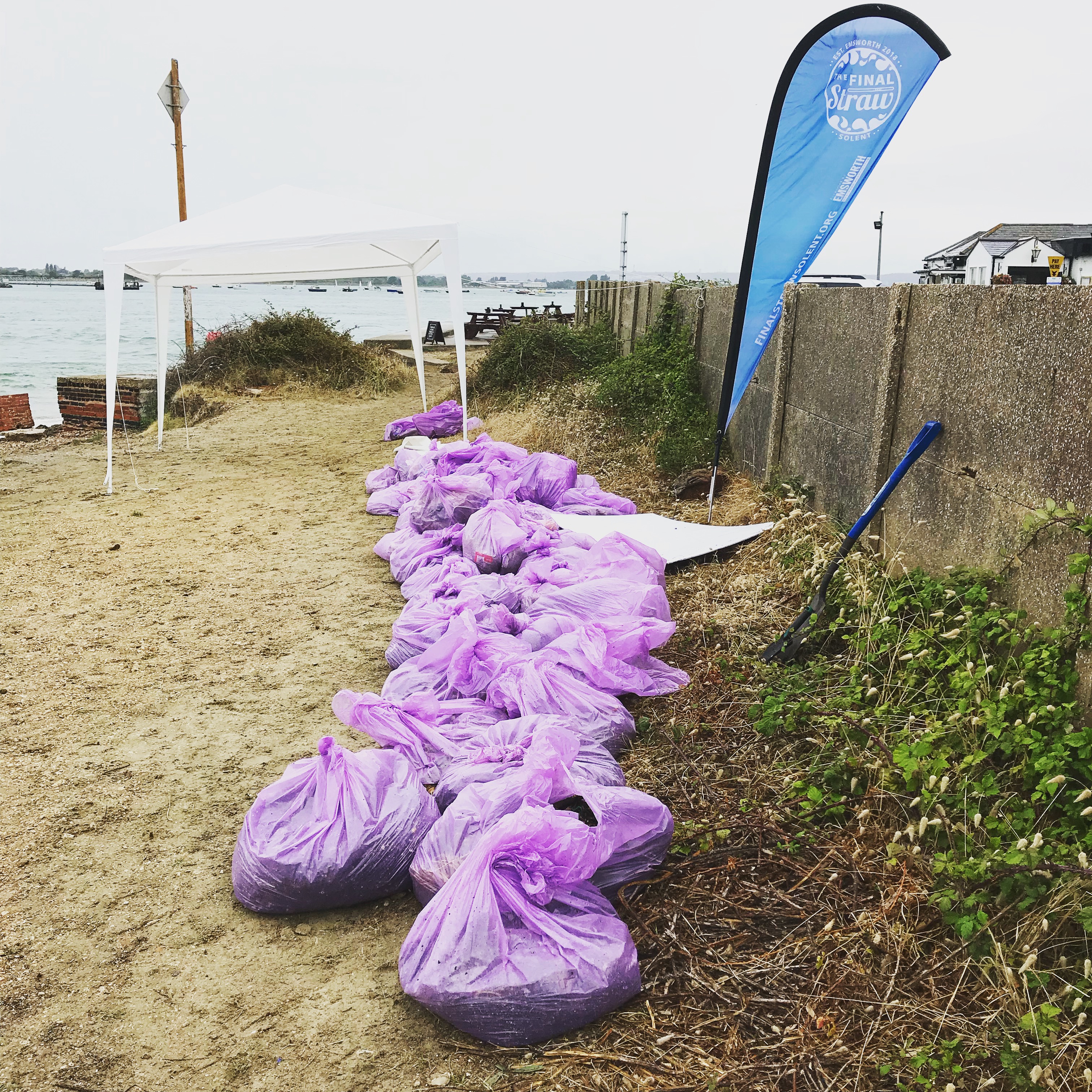
Sunday 12th August 2018 saw our seventh big beach clean-up, this time on Hayling Island near the Ferryboat Pub. The weather looked pretty dodgy but we went ahead anyway and about 40 superhero volunteers turned up! Straight away, we noticed that the level of microplastics (bits of plastic smaller than about 5cm) was incredibly high. We have had some stormy weather over the last couple of weeks since the heatwave broke, and we knew that the storm drains had been released in Langstone Harbour, so we expected a bit more plastic and litter pollution than usual.
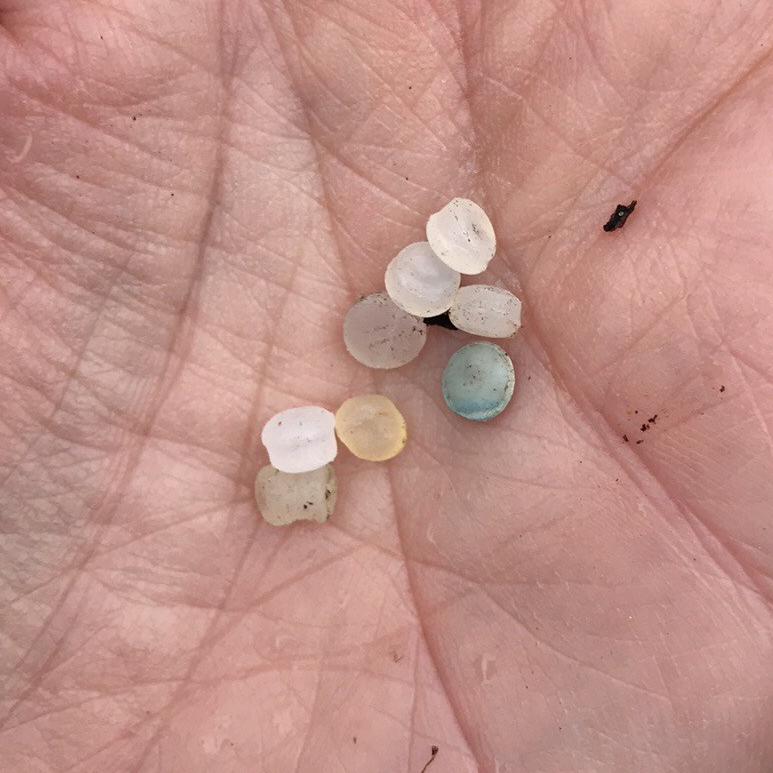
We were, however, pretty horrified by what we saw. The number of plastic cotton-bud sticks present, mixed in with the sand, seaweed and stones was very high. And the plastic nurdles. Oh the nurdles. If you aren’t sure what a nurdle is, I’ll elaborate. They are tiny bits of plastic that look a bit like lentils, used in the manufacture of plastic products, poured in their thousands into moulds and heated to make the products that we see on our shelves. They are mistaken by wildlife for food – they look exactly like fish eggs to seabirds, who eat them and sometimes feed them to their young. Unfortunately, through spills and mishandling, millions of them end up in our rivers, seas and oceans. And the evidence of this was exactly what we saw on Hayling. At previous beach cleans at that location we have seen a lot of them, but this looked like a ‘fresh’ batch. They were everywhere, in their thousands. The only way to collect them in any meaningful way was to shovel them, together with sand and substrate, into bags.
The other plastic pollution we found heavily featured bottles and caps, toothpaste or other tube lids, cups, fishing net and line and nappies – not pleasant. We collected 66 bags of litter altogether, over the course of 2 hours. We are so grateful to all the fantastic volunteers that gave up their Sunday morning to come and help clean up. We had to leave so much behind as we just did not have time to do more that day, so we will definitely be back very soon to continue.
We are really keen to find out the source of all the nurdles. We know that there are a lot of them dispersed in our oceans and local seas, however this really seemed like a new load – they were all quite ‘clean’ and didn’t look like they had been floating around for a long time. If anyone has any ideas or information to help us stop this awful pollution at the source, we would love to hear from you.