Bees are so essential to our existence that four years ago the United Nations decided that every year 20th May would become World Bee Day. 90% of the world’s wild flowering plant species depend on animal pollination, along with more than 75% of the world’s food crops and 35% of global agricultural land. A UN report shows that almost 35% of invertebrate pollinators, particularly bees and butterflies, face extinction globally because of human activities.
We are actively encouraging everyone that we engage with – our eco-club, schools, community groups, businesses and individuals – to try to leave areas of land to grow naturally, or replant areas that have been lawn with native wildflowers to attract and support pollinators. It’s great if the flowering period of different species of plant is staggered, so that there are flowers at different times of the year to support more pollinators.
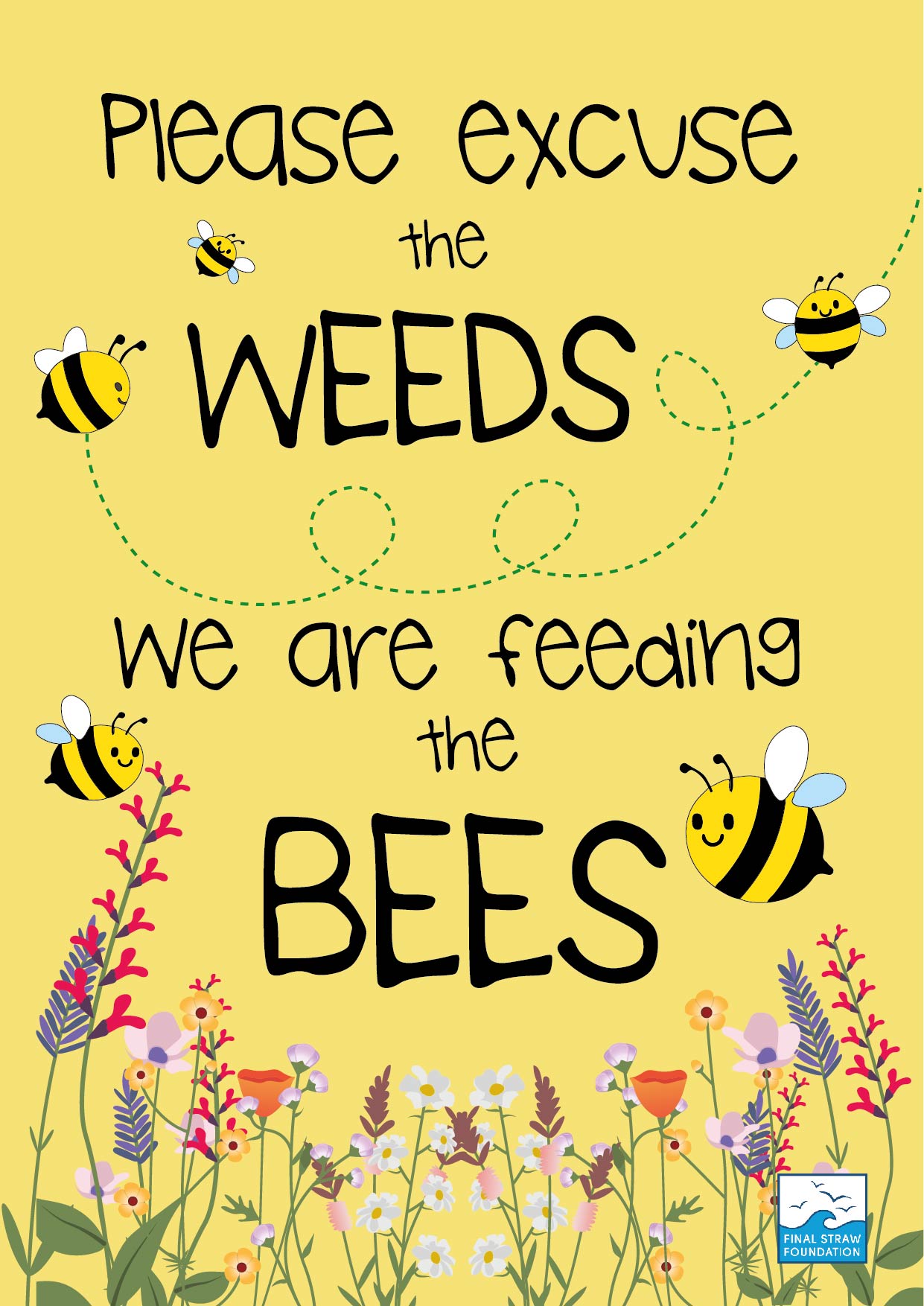
Sometimes, once these areas have flowered, sometimes they can look a bit ‘scrubby’. This stage is actually often one of the most important, as it’s when the plants are going to seed, which will ensure the flowers spread and continue the following year. We have created a poster to help support during this time for anyone to display in their window if they are worried about the neighbours wondering why the garden is a bit messy, or to inform passers-by why it is important!