The enormous rise in the use of disposable PPE since the start of the Covid pandemic is understandable. It’s important that the people that really need to be using these items – single-use masks, gloves, aprons etc. – have access to them and are able to use them where necessary.
However, for the majority of us, using disposable PPE is not always required. A reusable, 3-layered fabric mask is absolutely fine for a quick visit to the shops, and you don’t even need disposable gloves – just wash your hands thoroughly or use hand gel. A report published in September 2020* estimated that in the UK, we are sending 1.6 billion (yes, billion!) disposable face masks to landfill every month!
In the first few months of the pandemic, we began noticing the inexorable rise of PPE litter in the environment, it was usually more on the sides of roads, car parks and in built-up areas. We started to see face-masks and gloves washing up on our local shores in the summer of 2020, gradually increasing as the months of PPE use rolled on. There was a certain inevitability to this – PPE items dropped on the street are likely to get washed down the storm drains on the side of the road, ending up in the sea. We also were alerted to a huge increase in the use of lightweight disposable gloves in a couple of local petrol stations, with many of the used gloves being blown out of bins or dropped and making their way into the environment nearby.
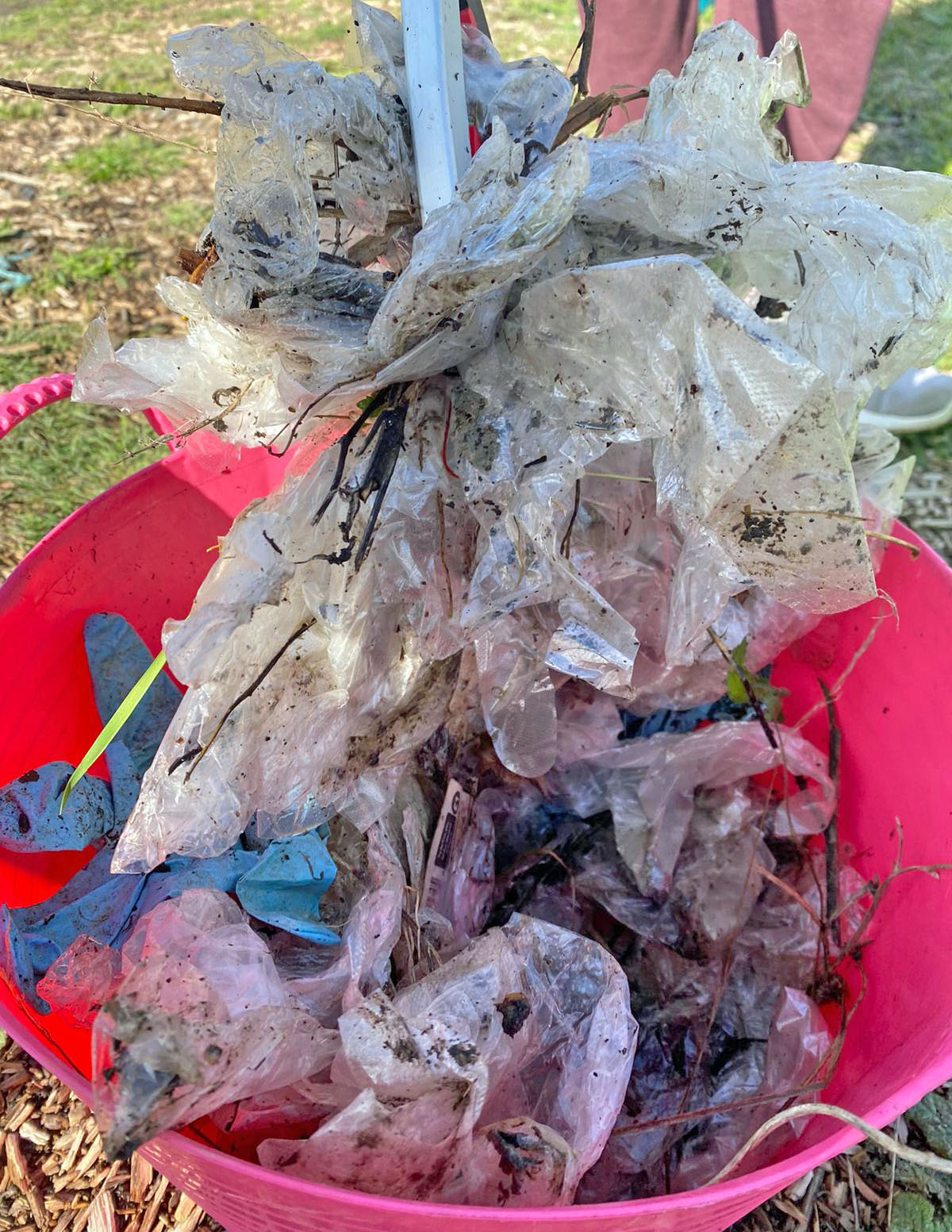
More recently, we have started to see more and more PPE in countryside and woodland areas. These have most likely blown out of car doors, dropped accidentally from pockets or possibly just thrown down as litter. People have been out enjoying nature, getting their daily exercise, but sadly leaving a trail of this medical litter behind them.
We would like to ask everyone to only use a disposable face mask or gloves if it’s really necessary, and to try to use reusable masks whenever they can. If you do use a single-use mask, please dispose of it carefully in an appropriate bin, never drop it as litter. We have seen these items wrapped around the feet, necks and bodies of wildlife, causing a real risk to the survival of the animal involved. Most disposable face-masks are made from polypropylene or similar fossil fuel derived plastics. They will not break down for hundreds of years in the environment, and when they do break down through exposure to UV light or friction, they just become smaller and smaller fragments of plastic (microplastic) that will hang around indefinitely.
Wearing a face-mask is vital at the moment. But please, make a choice to go for a reusable mask if you can, and be careful with any disposable masks that you do use.