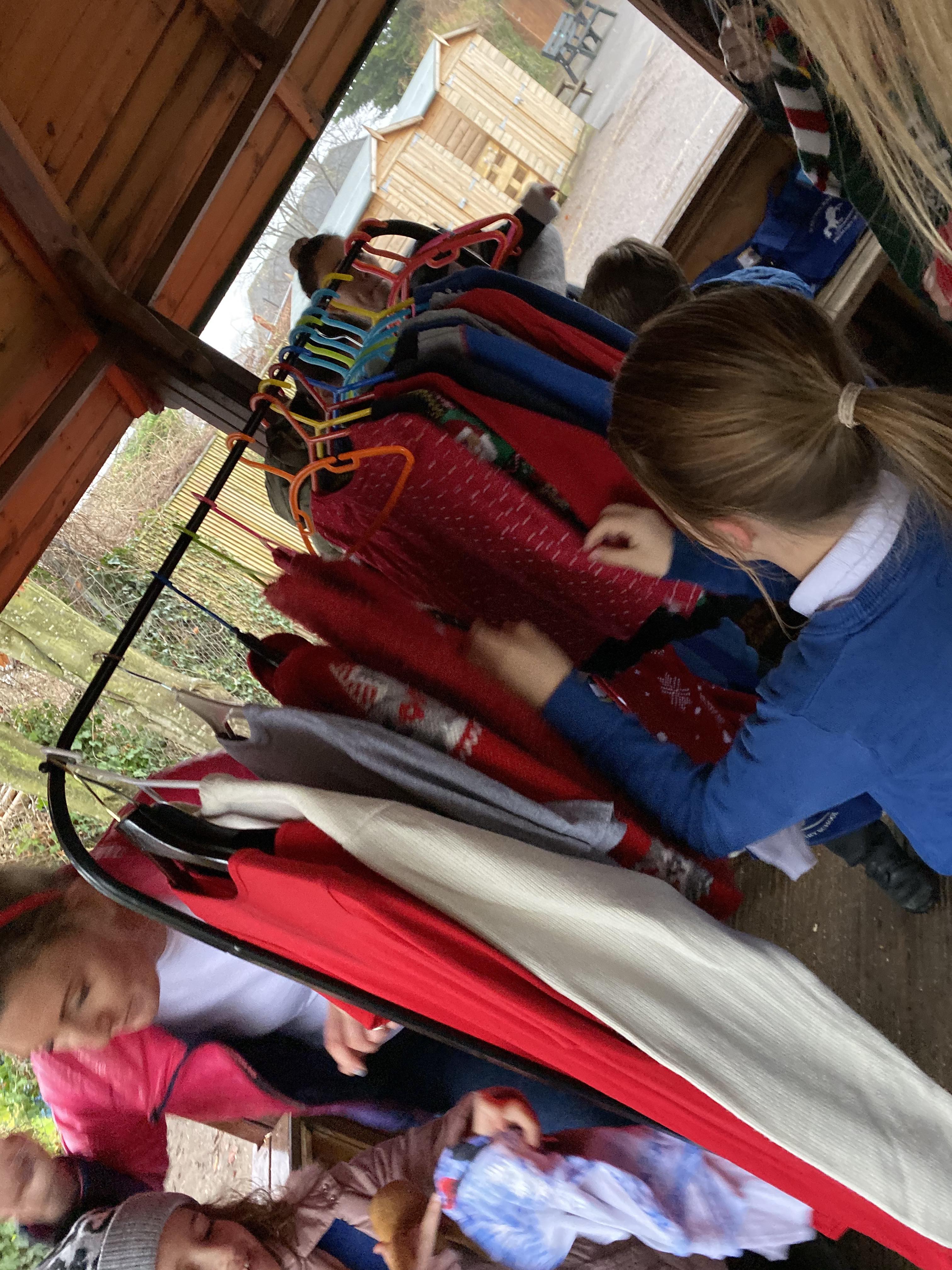
‘Tis the season! Halloween is over and we are heading towards the festivities of Christmas and all the joy it brings to so many. One of the rising stars of the Christmas season over recent years has been the Christmas Jumper. Love them or hate them, no doubt you will see them everywhere again this year. But what do we do with them when we have fallen out of love with them or children have outgrown them? A report by Hubbub in 2019 showed that a third of young adults buy a new Christmas jumper every year. An astonishing 65 million Christmas jumpers are reported to be forgotten or unloved at the back of UK wardrobes, and hundreds of thousands of them end up in our waste streams. So, how do we combat this enormous amount of festive fashion waste?
One way is to swap or donate jumpers. We have come up with a useful toolkit for your school or workplace to not only rehome unwanted or unloved jumpers with a new owner, but also to raise money for a charity or cause of your choice. You can find out more and sign up here to access our Christmas Jumper Swap Event resources – there are handy posters and a template letter to use for participants.